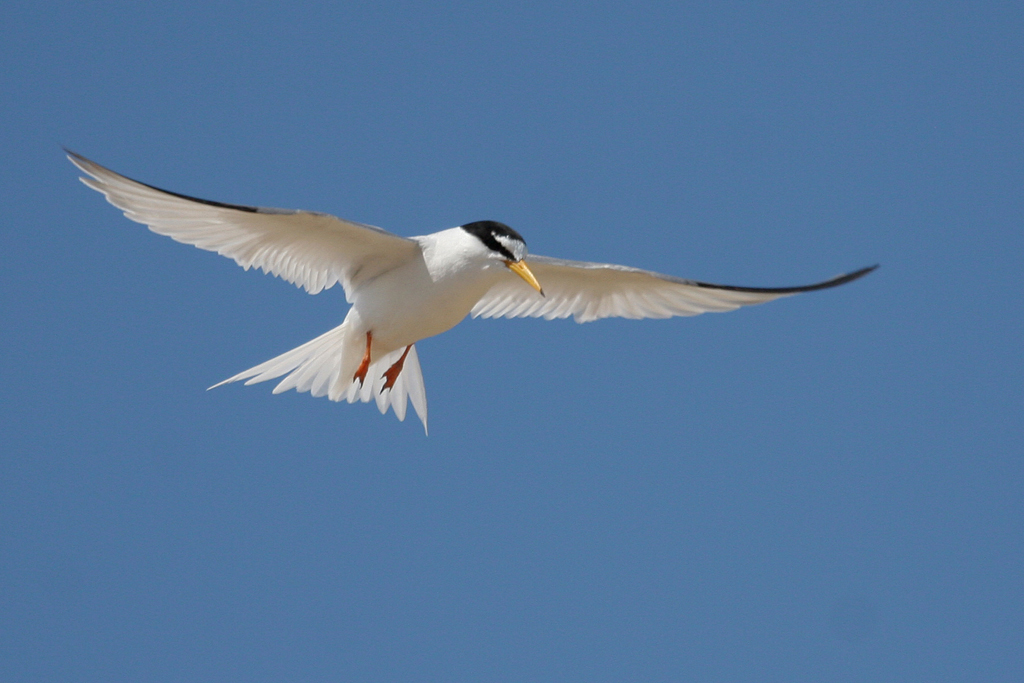
Not long to go now. March is the beginning of spring in our meteorological calendar. It was the first month of the year for the ancient Romans, who called it ‘Martius’ after Mars, their God of War, because it was the season when the weather became good enough for them to start fighting again. We have inherited the name and for us too it marks a beginning, but happily of a more creative kind. It’s the start of that unstoppable rush of new life, light and growth as the green wave of spring moves northwards through Europe and reaches our shores. We all have our own markers of this annual rebirth: the daffodils flowering, the hedges leafing, a chiffchaff singing in the copse on its return from Africa, or a wheatear in fresh plumage foraging on the beach. But for me one of the most stirring is that first sight of a butterfly on the wing, probably a lovely brimstone floating round a sheltered garden on a sunny day in early March.
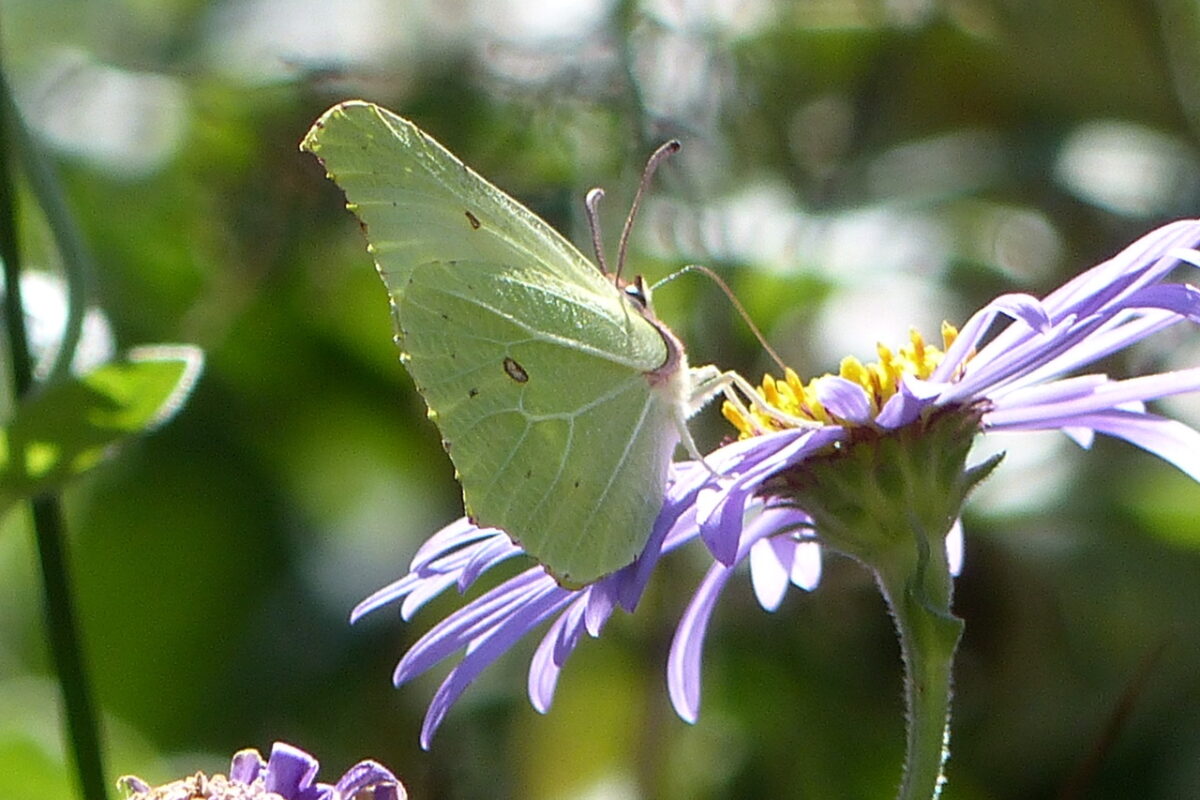
They are so-named after the colour of brimstone, the old name for sulphur (remember ‘fire and brimstone’ in the Bible?). The male brimstone is a gorgeous buttery yellow, the female paler (and slightly larger), but both unmistakeable on the wing with large rounded wings hooked at the tip and a strong buoyant flight. When they settle they always do so with wings closed and their wonderful camouflage is then displayed, their greenish veined underwings looking for all the world like leaves. It has been suggested that the male’s striking colouration is the origin of the name butterfly itself, a ‘butter-coloured fly’ – an attractive thought, but unlikely alas. Brimstones appear this early in the year, not because they have just emerged from a chrysalis but because they are one of the few British butterflies that actually overwinter as adults. At the first hint of any warmth in the sun they come out from their winter hiding-places, where they have been concealed in thick ivy or other evergreens like holly, and search out some reviving nectar. They’ll often suck it from early flowering daffodils and primroses, but their most favoured sources are purplish flowers like knapweed, teasel or thistle, and in the latter two a brimstone can reach down into the plant with its long proboscis further than most other butterflies.
The favourite food plant of their caterpillars, however, is buckthorn (common or alder), which is not very widely distributed so they need some nearby to lay their eggs on. Brimstones are also one of our most long-lived butterflies, emerging one summer and lasting right through to the next. Worth planting some buckthorn for?
Jeremy Mynott
February 2026