Village Voices Nature Note: Seasonal Cycles
01 Oct 2020
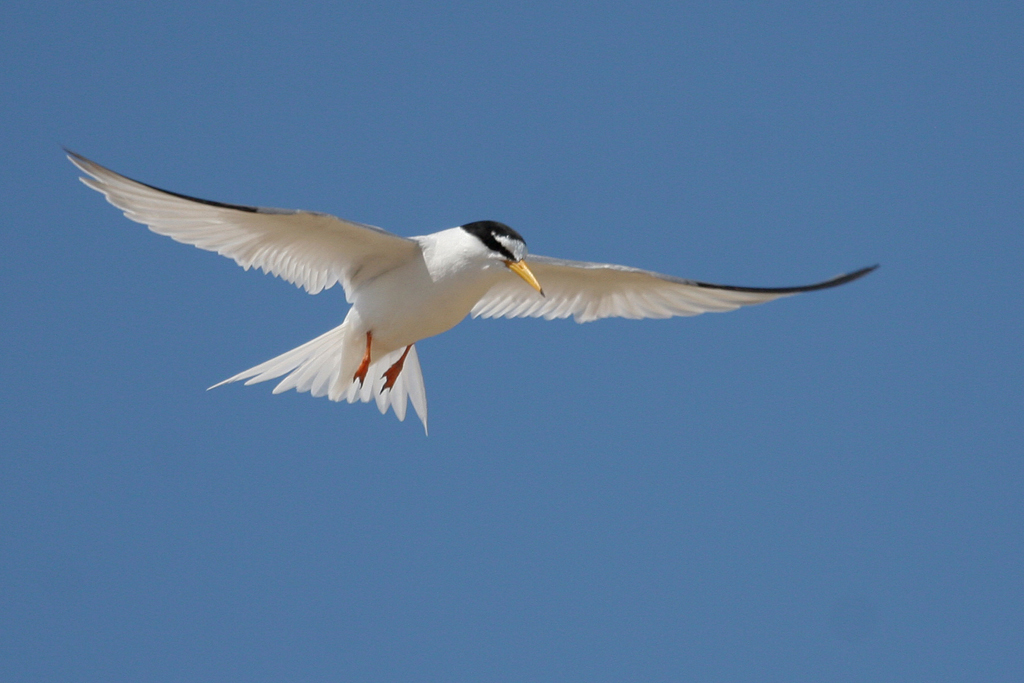
Just as the first arriving swallows in mid-April marked the beginning of spring, so the flock I now see gathering on the telephone wires portend our autumn. There must have been some fifty of them there this morning, all chittering and chattering furiously, as if psyching themselves up for their long journey to come. Every now and then, for no apparent reason, they suddenly all take off together in what birders call a ‘dread’ (a habit that swallows share with terns); they freak out in a cloud of fluttering wings, circle around together for a few seconds, and then settle back again, but restlessly, as if waiting for their flight number to come up on the celestial departure board. Strange to reflect that these same swallows will soon be swooping over elephants and ostriches in South Africa. We think of them leaving home to spend the winter there, but it will be spring in South Africa when they arrive, so who is to say where their true home is? It’s a continuous cycle of arrivals and departures.
We’ve just been through the seasonal spring cycle ourselves, one with its own strange paradoxes. There were the contrasts between the record-breaking sunny weather and the looming climate crisis, and between relief in the wonderful new silences and the horror at the headlong progress of the pandemic. The national lockdown rightly imposed serious restrictions, but many people found it liberating to take up new interests or revive old ones. They lost themselves and found themselves in activities like gardening, music, art, physical exercise, reading, crafts and games. Nature too provided great solace as people saw and heard things close to their own homes they had never properly appreciated before. As soon as lockdown was announced on 23 March, I agreed with two naturalist friends living in different parts of the country, Michael McCarthy (London) and Peter Marren (Wiltshire), that we would each keep detailed diaries of our experiences of this extraordinary Covid spring and then combine them to share with others our sense of the delight and inspiration the natural world can offer in a dark time of stress and anxiety. We made a book of it, which will be published in mid-October. The Consolation of Nature is the story of what we discovered by literally walking out of our front doors.
These seasonal cycles are just that, cycles in which the end of one season is the beginning of the next, which in turn brings us back to the beginning again, but not quite the same as we were before. Hopefully knowing more, caring more and more deeply grounded in the only world we have.
Jeremy Mynott
Village Voices Nature Note: Sounds of Summer
01 Sep 2020
I have a wonderful childhood memory of high summer – just lying in the long grass, looking up at the blue bowl of the sky and hearing the sounds of crickets and grasshoppers chirping away endlessly all around me. This came back to me the other day when I found a splendid Roesel’s bush cricket actually sitting on my back gate. The bush crickets are a special group, considerably larger than most grasshoppers, and make very loud and distinctive sounds. Whereas grasshoppers produce these by rubbing their wing-cases against their legs, bush crickets do it by rubbing their wings together. An expert can distinguish all their different ‘songs’ just as easily as different bird songs, though alas they are so high-pitched that once you’re over 50 you start losing them. I do remember the Roesel’s song, however: an extraordinary crackling like the sound of overhead electricity pylons. Naturalists have had to resort to equally bizarre similes to describe the other species in the stridulation section of this insect orchestra: the great green bush cricket ‘like the sound of crystal beads dropped in a stream down a crystal stair’; the cone-head ‘a quiet sewing-machine purr’; while the alarmingly-named wart-biter cricket produces a rapid burst of short clicks; and the oak bush cricket uses his long hindlegs to beat out a tap-dance ‘like the sound of soft rain’.
Grasshoppers have inspired some human music, too. Benjamin Britten composed Two Insect Pieces for piano and oboe, where the bounding gait of the grasshopper is contrasted with the angry buzzing of the wasp. And John Keats celebrated the cricket chorus in a lovely poem that begins, ‘The poetry of earth is never dead’, making the point that you could hear crickets through winter as well as summer. Or you could then, when the cricket on the hearth, immortalised in Charles Dickens Christmas Story, was a cheerful presence in many households. It is said that you can use the house cricket’s chirps as a thermometer. The formula for a centigrade reading is: count the number of chirps in 14 seconds, add 25, divide by three, then add four. So, if your cricket chirps 112 times a minute it should be about 20°C outside. Check it out though you may have to listen for your house cricket in a boiler room nowadays.
Crickets and grasshoppers are all members of the large family called the orthoptera (meaning ‘straight-winged’), which also includes the grasshoppers of folklore we now call locusts. Despite their destructive reputation, the Bible calls them one of the four ‘little things’ regarded as ‘exceeding wise’, along with ants, spiders and rabbits. ‘Why?’ is another story.
Jeremy Mynott
Village Voices Nature Note: hidden beauty
03 Aug 2020
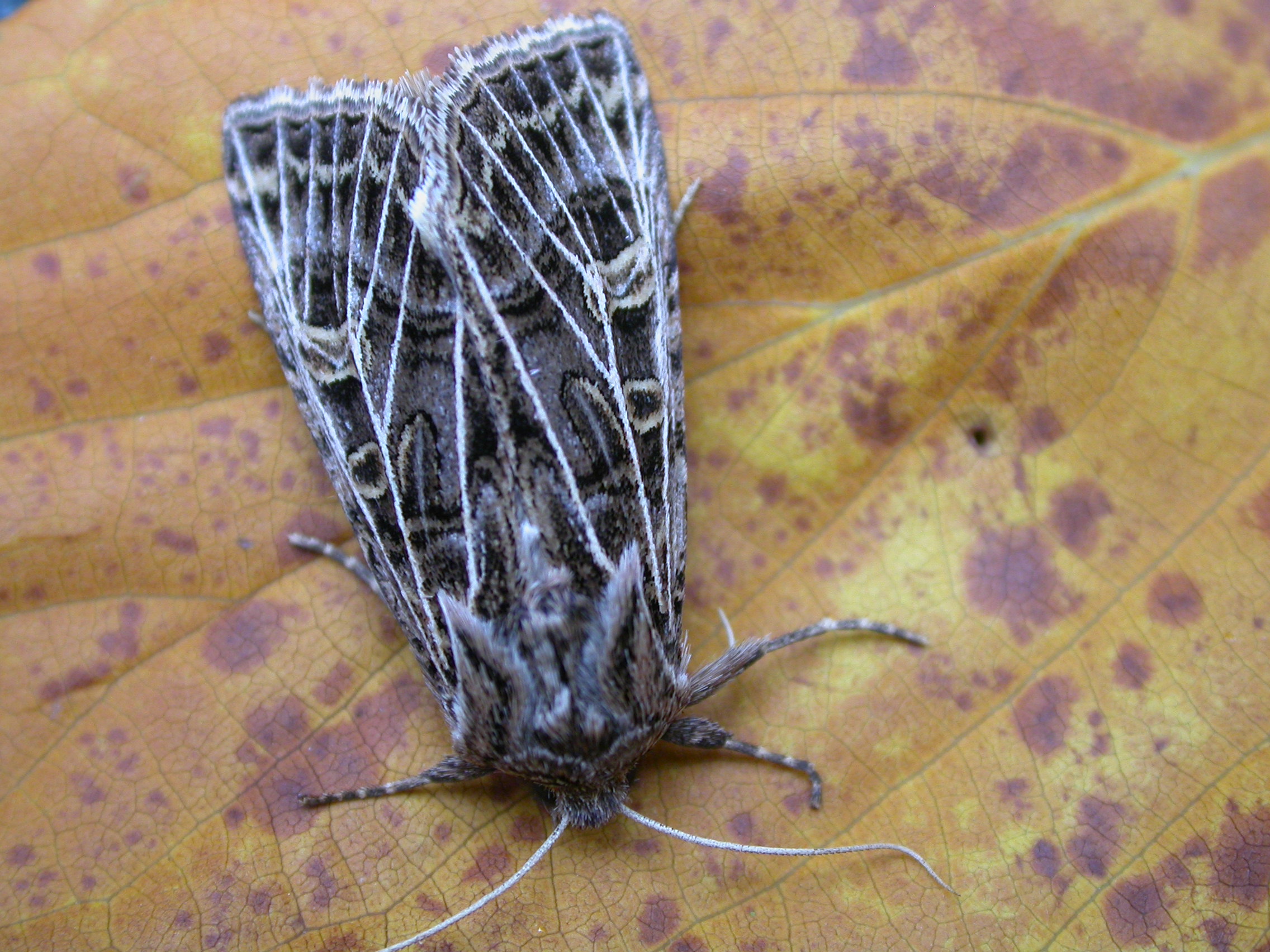
One positive thing about lockdown has been realising how much foreign travel you can do very close to home. No need to go to Majorca or Marrakesh - or even Margate. Just set up a moth trap in your back garden overnight and Brindled Beauty you’ll see the most exotic sights in the morning. The Brindled Beauty I caught last night, for example, is just what it says on the tin, though the ‘beauty’ here is not an obvious one. It’s not brightly coloured but has a very subtle combination of textures and patterns that might have appealed to the fabric designers who were leading lights in the Aurelians, the society of moth and butterfly fanciers in the 17th century when many of our moths were given their current names. It’s the same with some birds. Who could improve on the beauty of a wryneck, woodcock or nightjar, each patterned from a palette of browns, greys and black to provide perfect camouflage in their natural surroundings. Subdued in one sense but just gorgeous when you see them close-up.
And talking of fabrics, another specimen in the catch this morning was a Muslin Moth, a male one. There’s an unusually marked difference between males and females in this species: the females are a rather grand ermine-white with just a few scattered black spots to add a touch of class; but the male is a drab, sooty colour, which perhaps accounts for its scientific name mendica ‘beggarly’. Apparently, the males are only active by night and the females by day. Presumably they just meet for breakfast/supper (? brupper), though I can’t quite see the evolutionary advantage in that.
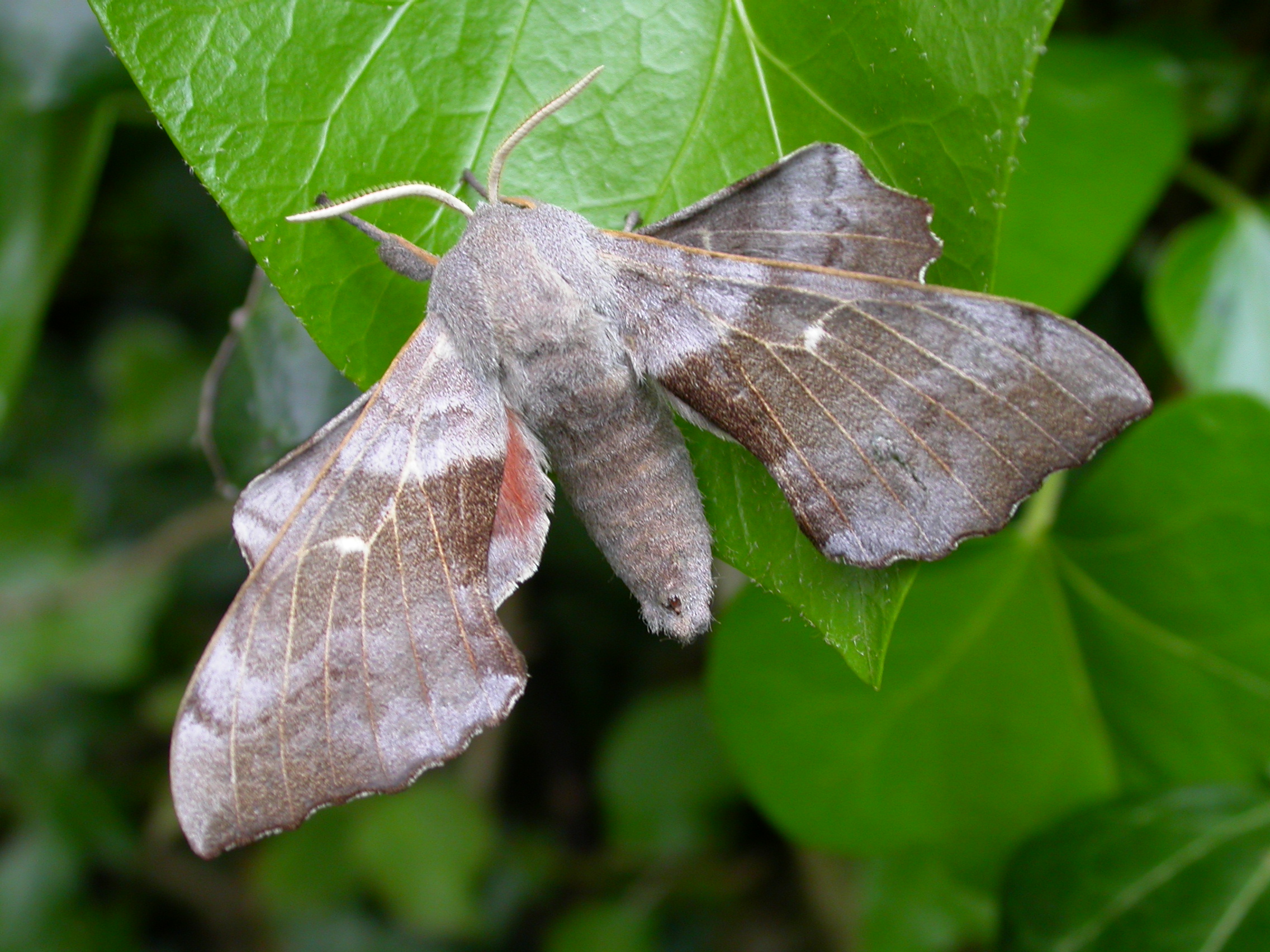
An even more striking discovery was a Poplar Hawkmoth. This is a huge moth, which couldn’t look more conspicuous when clinging to an egg- box, as in this image. The patterning is again very subtle but it’s all there for a purpose. The orange patch just visible on the hindwing can be flashed to startle enemies. The wings themselves look like some advanced aeronautical-like design, but the function is one of camouflage not speed. The forewing is semi- detached from the hindwing, so in its resting posture on a branch the moth perfectly resembles a bunch of dead leaves. Finally it hangs around like that because it has no functioning proboscis and can’t feed. It doesn’t need to because its only purpose in life is to live long enough to mate, lay eggs and perpetuate its genes. Then the same cycle starts (and ends) for its descendants.
When I release the moths in the garden they disappear without trace, like a fading dream. Such extraordinary creatures - and a whole world you can explore without leaving home.
Jeremy Mynott
Village Voices Nature Note: The Sign of Summer
01 Jun 2020
Spring has seemed particularly precious this year. I think people everywhere have been turning to nature as a solace in this time of great stress and uncertainty. We’ve found some reassurance in the fact that life in the natural world, at least, is continuing as normal. There’s a regular annual succession in nature’s calendar which gives a framework to the season: from the first Swifts daffodils to the early butterflies, next the bluebells, and then on to the first swallow (bang on schedule again this year on 15 April). But there is still one more migrant to come, as I write this, one that always seems to me to mark the point at which spring segues into summer. It’s the swift. I get swift-neck at this time every year, scanning the skies to catch my first sight of that black profile scything through the upper air. The poet Ted Hughes always took their safe arrival each summer as a sign that all was still well with the world:
They’ve made it again
Which means the globe is still working
The creation’s still waking refreshed,
Our summer’s still to come.
Sometime around the 10 May you’ll see and hear them, literally screaming overhead as they chase each other over the roof-tops, then whirling up into the heavens, only to bank and dive again at wing-shuddering speeds. They are the most aerial of all our birds. They eat, mate and even sleep on the wing, spiralling high into the sky to take the avian equivalent of cat-naps. Sometimes pilots of planes (remember them?) report seeing swifts at great heights, in a stratum other birds never reach. Incredibly, when the swifts that breed around here have reared their young and leave their nests built in crevices in church towers and the like, they don’t touch down again until they return next year. Their whole lives are spent in the air. They therefore don’t have, because they don’t need, feet that can grip and perch the way swallows can. In fact, if swifts ever land on the ground they find it very difficult to take off again. Their scientific name is apous, meaning ‘footless’. But once in the skies, they are in their true element and are designed with a perfect aerodynamic shape to cut through the air with minimum resistance. A truly charismatic bird – and quizzers might like to remember that as far as I know it’s the only British bird whose full name is an adjective: swift by name and by nature.Let’s hope they return on time as normal, because there’s no ‘normal’ in the human world now.
(PS - 8 May, they’re back!)
Jeremy Mynott
Stonechats
16 January 2017
Lots of stonechats around at present, thanks to the generally mild winter. You can see them perched up on tall stems of dead vegetation or fence-posts either side of the sea walls. An extended cold spell would cause them serious problems, though.
Jeremy
Flocks of golden plover
13 January 2017
On the ploughed fields between SS and East Lane to the west of the seawall there are flocks of golden plover. They are quite invisible until one of them calls and when you scan the field you then see up to 100 of them picking over the soil. Plovers have sometimes been thought birds of omen but if this Friday 13th turns out to bring calamitous floods, as forecast by the secular authorities, the birds at least are betraying no foreboding.
Jeremy
Owls
11 January 2017
Highlight of early January has been the presence of short-eared owls over the rough pasture S of the Tower (now happily restored to vigour after the depredations of the sheep last year, and so a refuge for voles again). Unfortunately, they have sometimes been harassed by the photographers eager for the definitive 'killer shot' but they have also been observed and enjoyed by residents like Juliet Johnson and Caroline Reekie who have reported their sightings to me. Wonderful birds to watch in that easy gliding flight, showing the palette of subtle browns and buff in the wing feathers.
Jeremy
The greening of the rocks
12 January 2017
The rocks in the East Lane defences are beginning to become a little mini-environment. They are greening very nicely with sea-weed, which attracts its own marine life, which in turn has become a resource for purple sandpipers (a rare visitor on this coast, more at home on the rocky shores of the NE). There was one roosting in full view on the old breakwater – how about a new groyne to attract some others!
Jeremy
End of year
30 December 2016
Thanks to everyone who has supported and contributed to this survey over the last two years. It continues! I have already noted various additions to those listed in the appendix of our booklet, Knowing Your Place: wildlife in SS, and I've arranged for some experts to come here in 2017 to do proper surveys of some categories that were not fully covered first time round. We plan a second edition at some stage and will keep you posted. Meanwhile a happy and successful new year to all ... including the wildlife.
Jeremy
Last cuckoo?
3 August 2016
A cuckoo on the fence posts near the Battery. Maybe the last of the season.
The avocets in the lagoon just further on have reared one chick successfully, despite the interference from walkers and dogs.
Jeremy