Yellow everywhere
09 Jul 2023
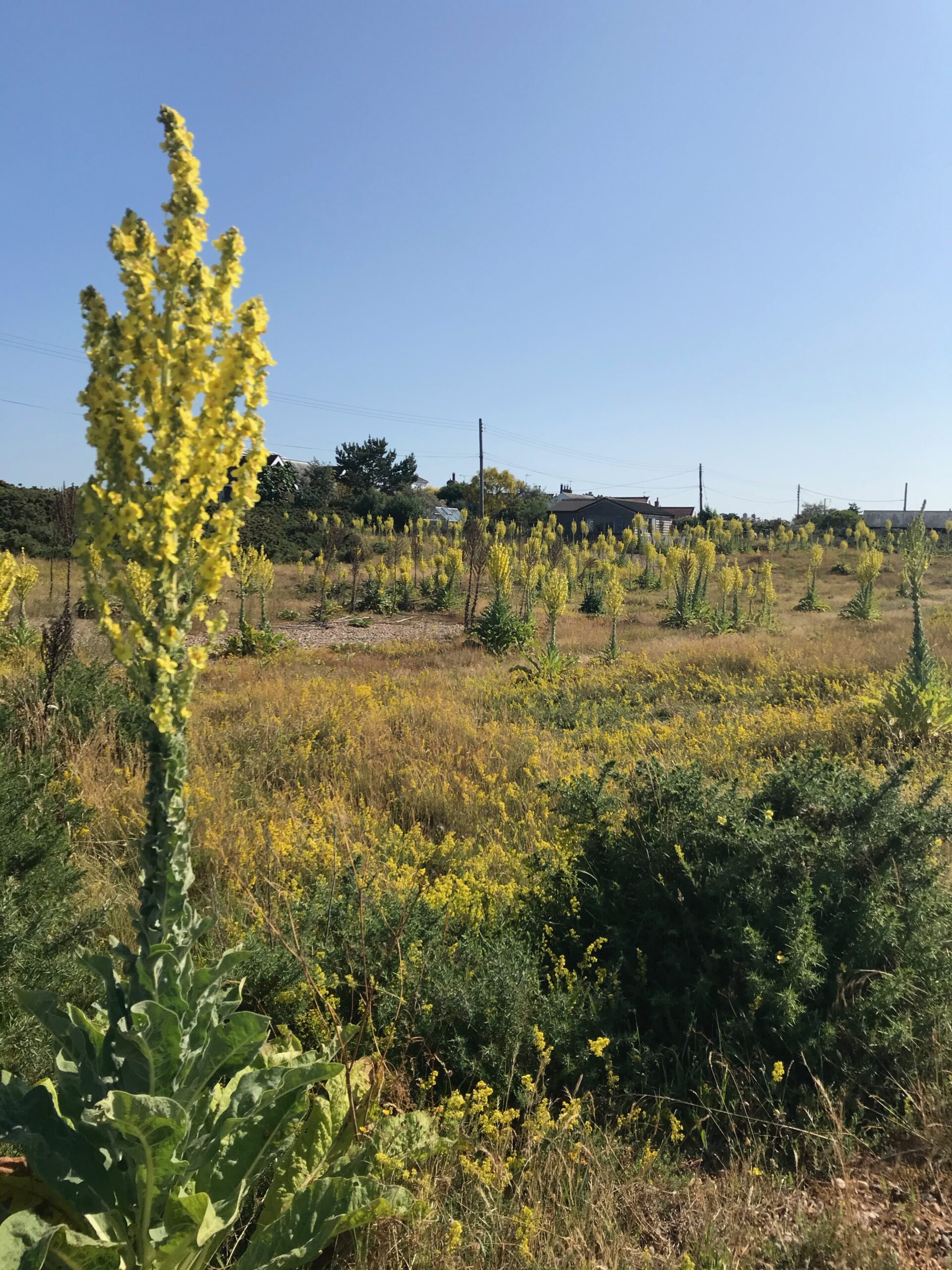
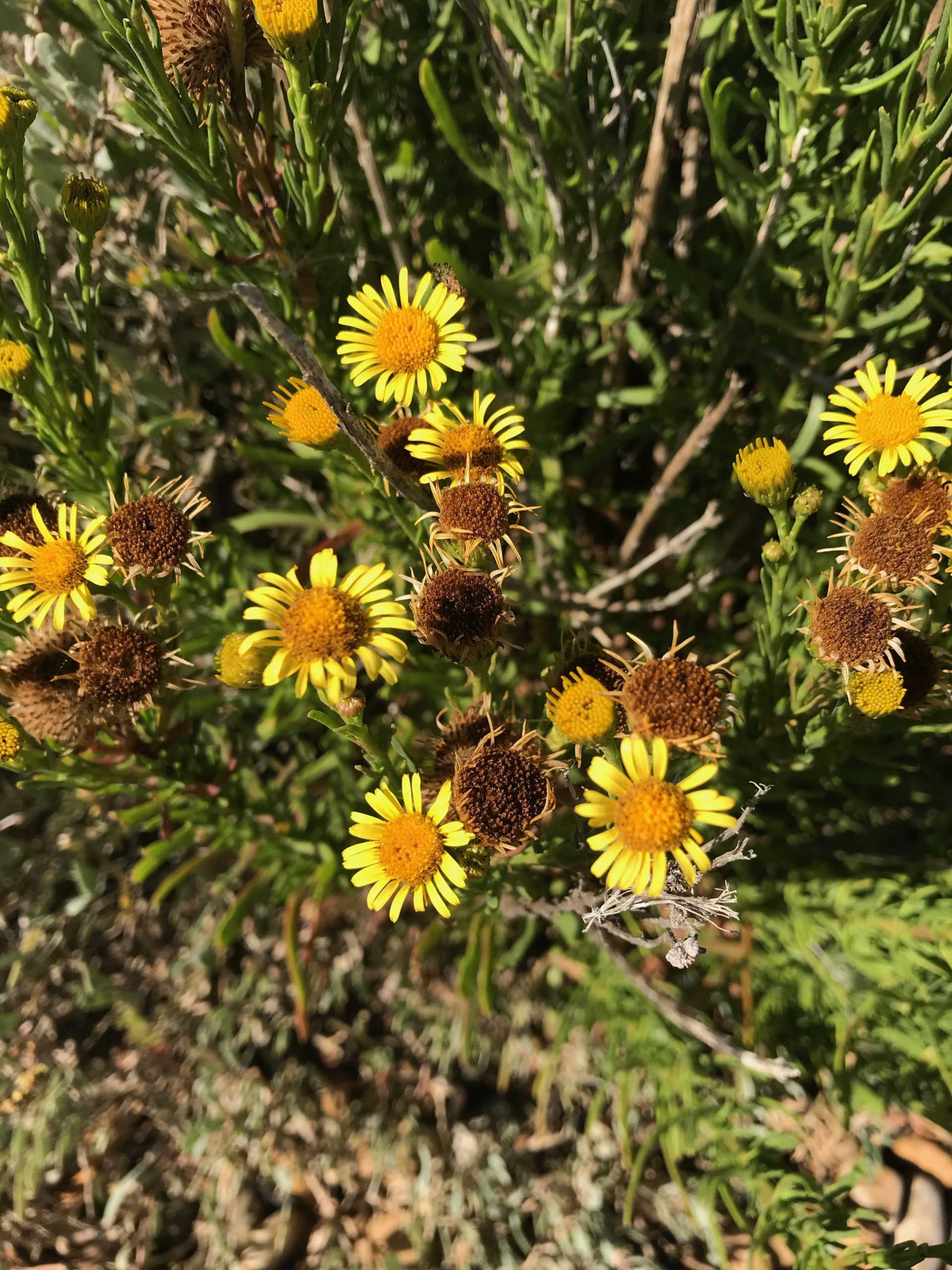
We're living in a blaze of yellow at present: gorse, broom, drifts fo ladies bedstraw, and the mulleins marching like soldiers across the grasslands.
Jeremy



Immigration is an emotive subject. In the natural world, that is, never mind the human one. People are rightly very keen to protect what remains of our natural heritage of native plants and animals – we’ve lost so much in the last 75 years or so, most of it through our own doing. But that has also made us suspicious of foreign competition, particularly when it seems to threaten some favourite native species. It’s true that historically there have been some disastrous introductions of invasive species: whether accidental, in the case of the beetles in imported timber that gave us the Dutch elm disease which changed our landscapes for ever; or deliberate, in the case of North American grey squirrels that were released at Woburn Abbey in the nineteenth century and have since been displacing our native red squirrels (and hence get blamed, like the American wartime GIs, for being oversized, oversexed and over here).
It gets historically and emotionally complicated, however, when we start to challenge the origins of anything we regard as a pest or a public nuisance. Take the case of Alexanders, the wild parsley with the glossy green leaves and yellowish heads we see flourishing now on roadside verges in coastal districts. I’ve heard the most xenophobic descriptions of it as a ‘foreign’ or even, on an ascending scale of hostility, an ‘alien’ plant, to be eradicated before it overwhelms all our hard-pressed natives. And there are regular patriotic campaigns to decapitate all these unwelcome invaders.
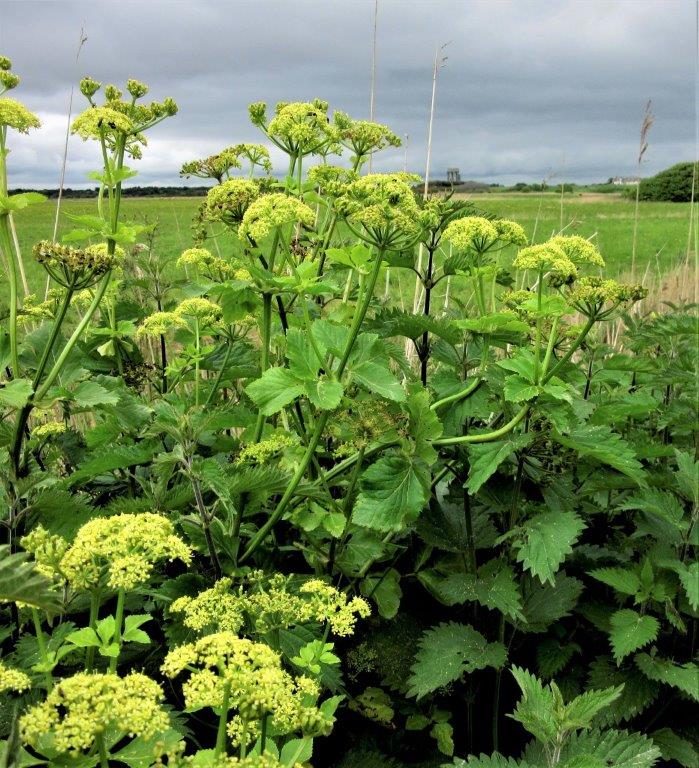
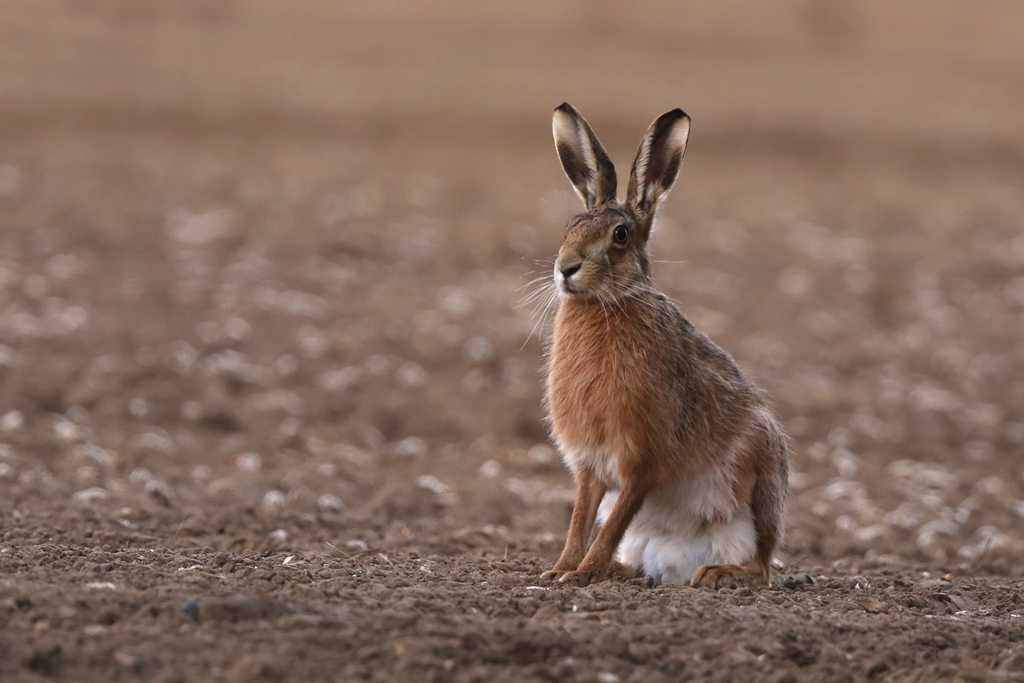
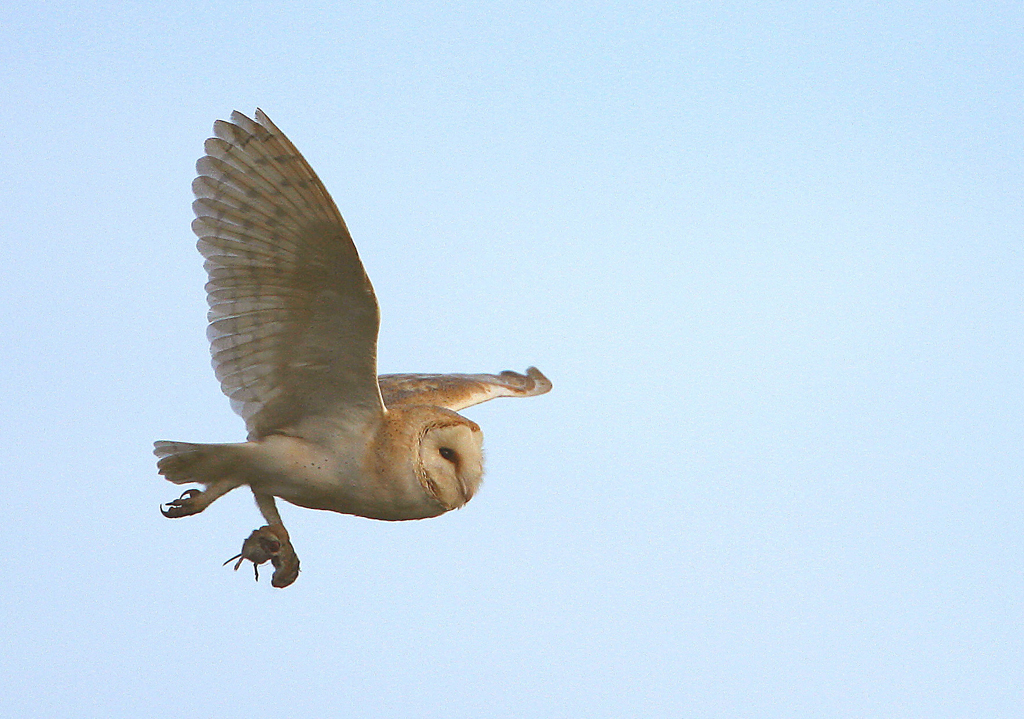
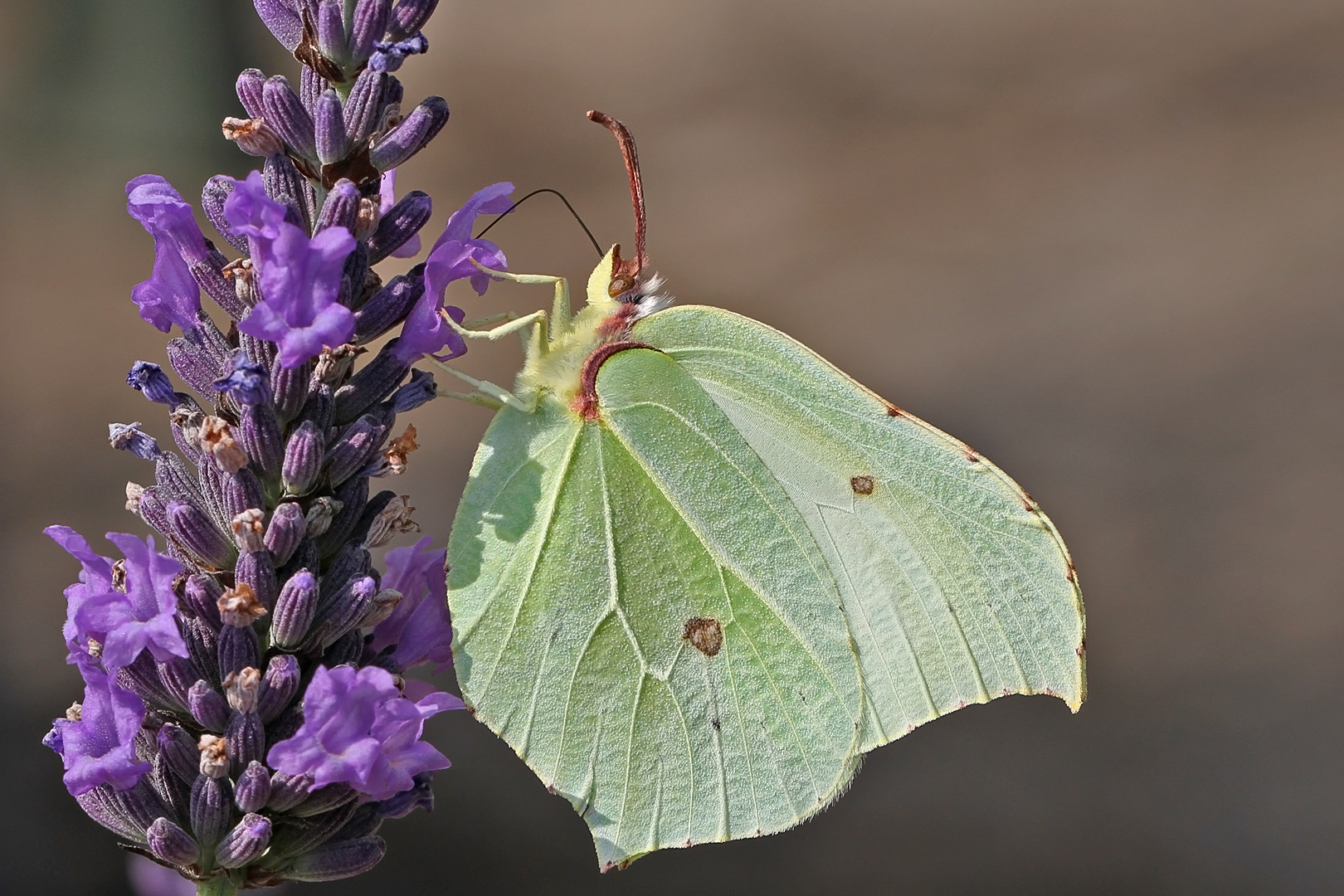
Hang on, though. The Alexanders came here with the Romans some two thousand years ago, valued as an all-purpose spring vegetable. The leaves were used in salads, the roots roasted like parsnips and the black seeds ground as spice. The monks used to cultivate Alexanders in their herb gardens in the medieval period. And the name itself has nothing to do with Alexander the Great’s all-conquering invasions but is an English corruption of the Latin name Olus Ater (‘Black Herb’). If you’re going to say Alexanders are non-natives that don’t belong here, how about our much-loved Brown Hares that arrived about the same time? How about our glorious Horse Chestnut trees, which came from Turkey in the sixteenth century; or the cute Little Owls, introduced only in the late nineteenth century? What about buddleia for that matter– imported from China in the 1890s – which nature-lovers actively plant to support our native butterflies? It’s hard to be consistent.
In deep history, the most invasive species of all has of course been Homo sapiens, populating the whole globe and continuing to displace its wildlife everywhere. Who is the real menace?
Jeremy Mynott
6 June 2023
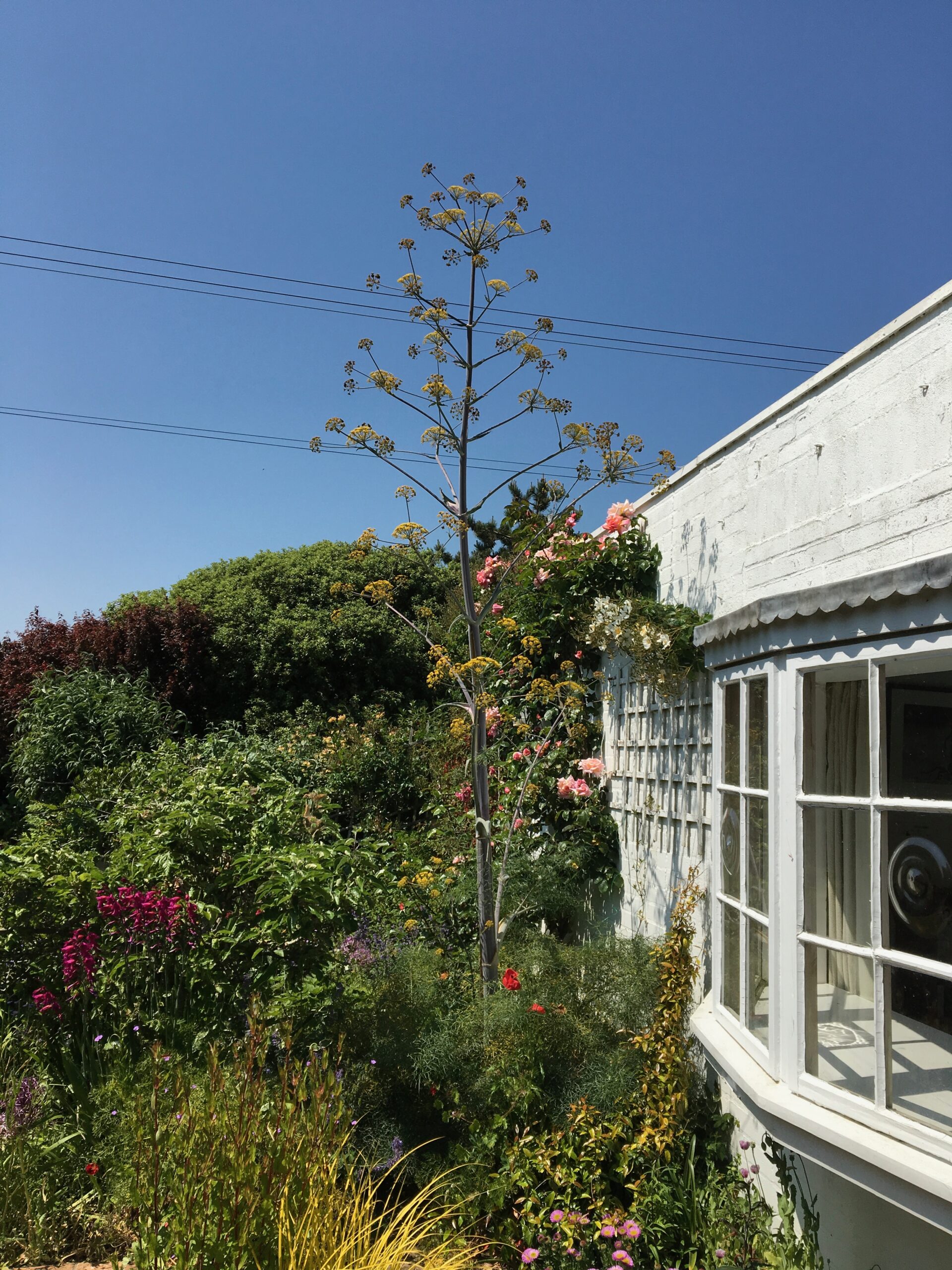
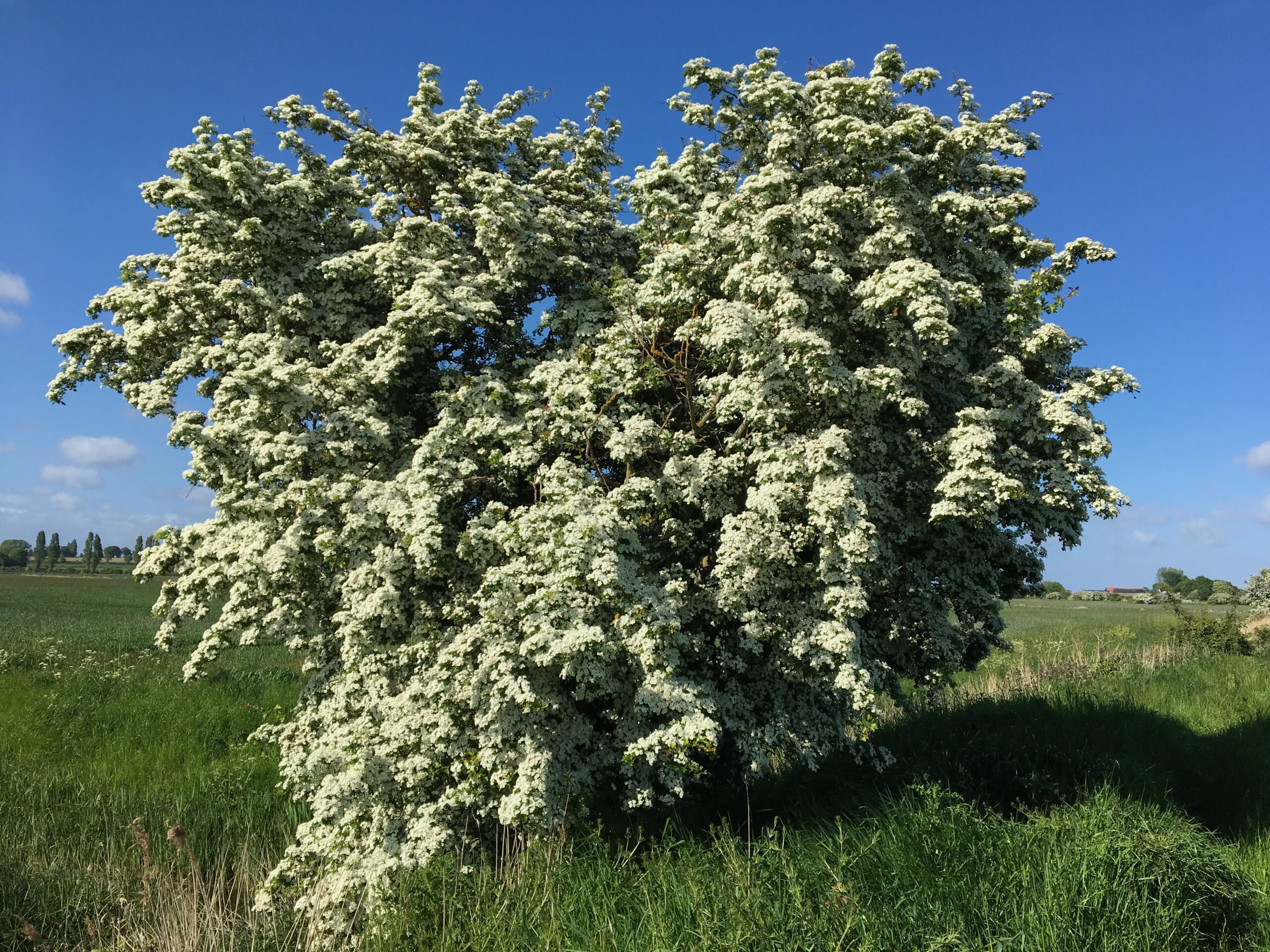
Birdwatchers often talk of identifying a bird at a distance just by its ‘jizz’, its characteristic outline and behaviour. We can all do this with people, too – you can recognise a friend or family member a long way off, just by their profile and the way they walk. Most trees have a very distinctive outline as well. When I was a child my parents tried to distract me on what then seemed to me interminable car journeys by playing a game of counting the different trees we could identify on the way. Once you got your eye in it was easier than you might think and we’d usually get quite a good tally in the ten miles or so before I asked, ‘Are we nearly there yet?’. Try it next time you drive children to Woodbridge or Ipswich, as a green alternative to electronic toys.
Anyway, once you know the common trees any strangers start to stand out and I’ve seen some unusual tree species this month. One was in a scruffy churchyard with some Yews and Ash and it flummoxed me at first. But when I got close I could see some of last year’s leaves and shrivelled brown fruits on the ground and I noticed the smooth trunk was peeling away in chequered plates. Ah, Chequers, the old country name for a fine but now rare native British tree, the Wild Service.
We also visited the Gainsborough Gallery in Sudbury last month, which has a charming little garden at the back, once a herb garden or a domestic orchard, I guess. They have a trio there of ancient trees of great distinction – a large spreading Mulberry, propping itself up with twisted limbs bent down to the ground like elbows; a quince, famous in classical times for its ‘golden apples’, which make superb quince jelly (perfect with cheeses); and thirdly a Medlar, the fruit that famously goes rotten almost before it is ripe, but is delicious if you can catch it just right. None of these three is native to Britain, but they are now long-established residents and add great character to our treescapes.
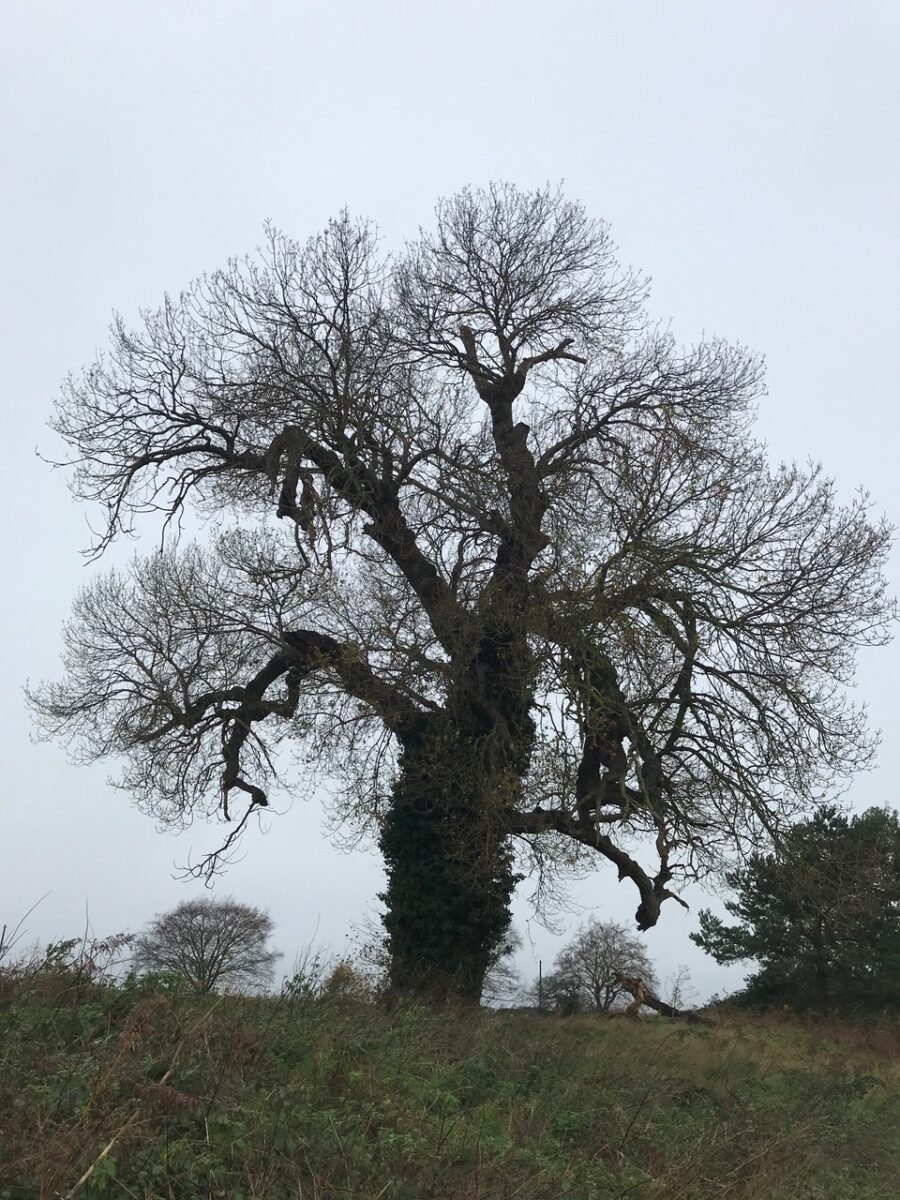
My final encounter was the best, though. I unexpectedly came across a magnificent tree standing almost alone in a field near Butley. And this time I did recognise it straightaway. It had a very characteristic tilt to it and deep corrugations in the corky bark. A Black Poplar, once common in East Anglia and a familiar sight in Constable’s paintings, but now endangered following the drainage of our water meadows for ‘development’. I couldn’t resist it. I gave it a hug.
Jeremy Mynott
4 March 2023
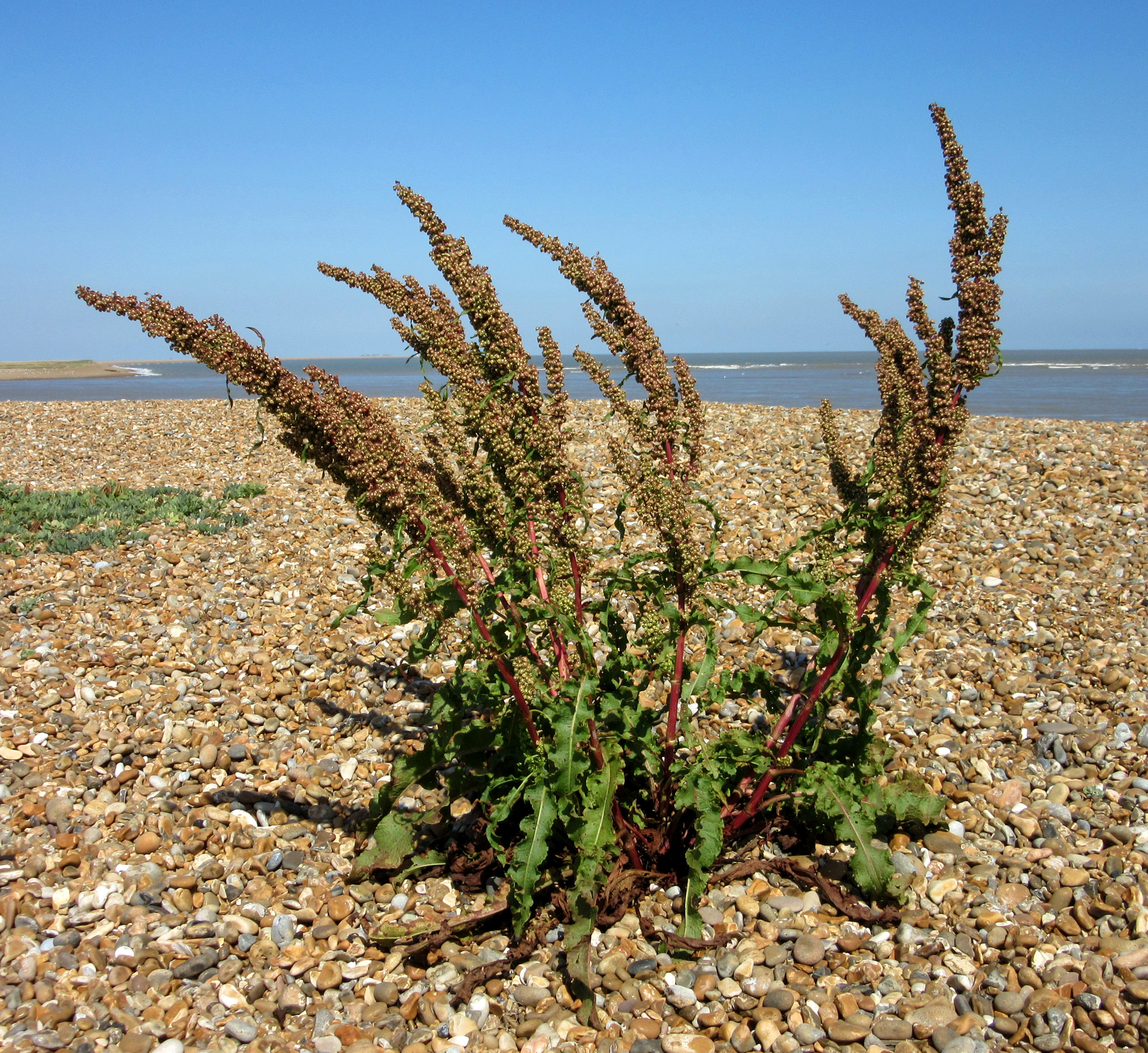
You have to be tough to survive at Shingle Street – if you’re a plant on the shingle banks, that is. Just imagine. You’re regularly doused with salt spray, exposed to constant winds and parched by the sun; there’s no fresh water and almost no soil; while the shingle itself is unstable and constantly shifting. It’s an extreme environment, a desert of stones. Yet there is a community of plants out there that have evolved specialised tactics to cope with those harsh conditions:
We are blessed by our thriving shingle bank colony of these rare and beautiful plants. It’s one of the most important in Britain, which is why Shingle Street is designated an SSSI (Site of Special Scientific Interest). We therefore inspect the plants regularly to check on their condition and a dedicated team of local volunteers has just completed the latest detailed survey, whose results will appear in due course on the Shingle Street website.
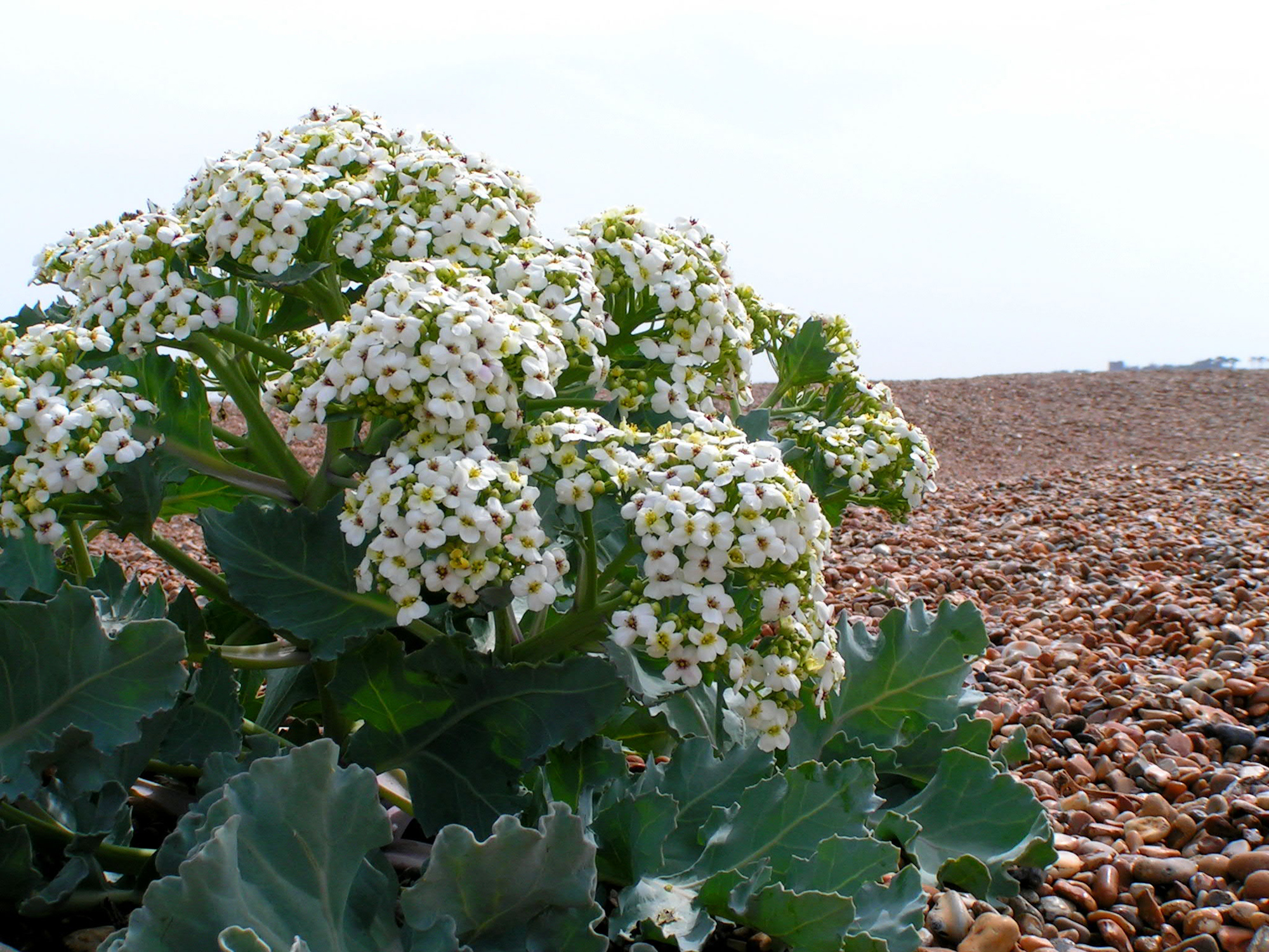
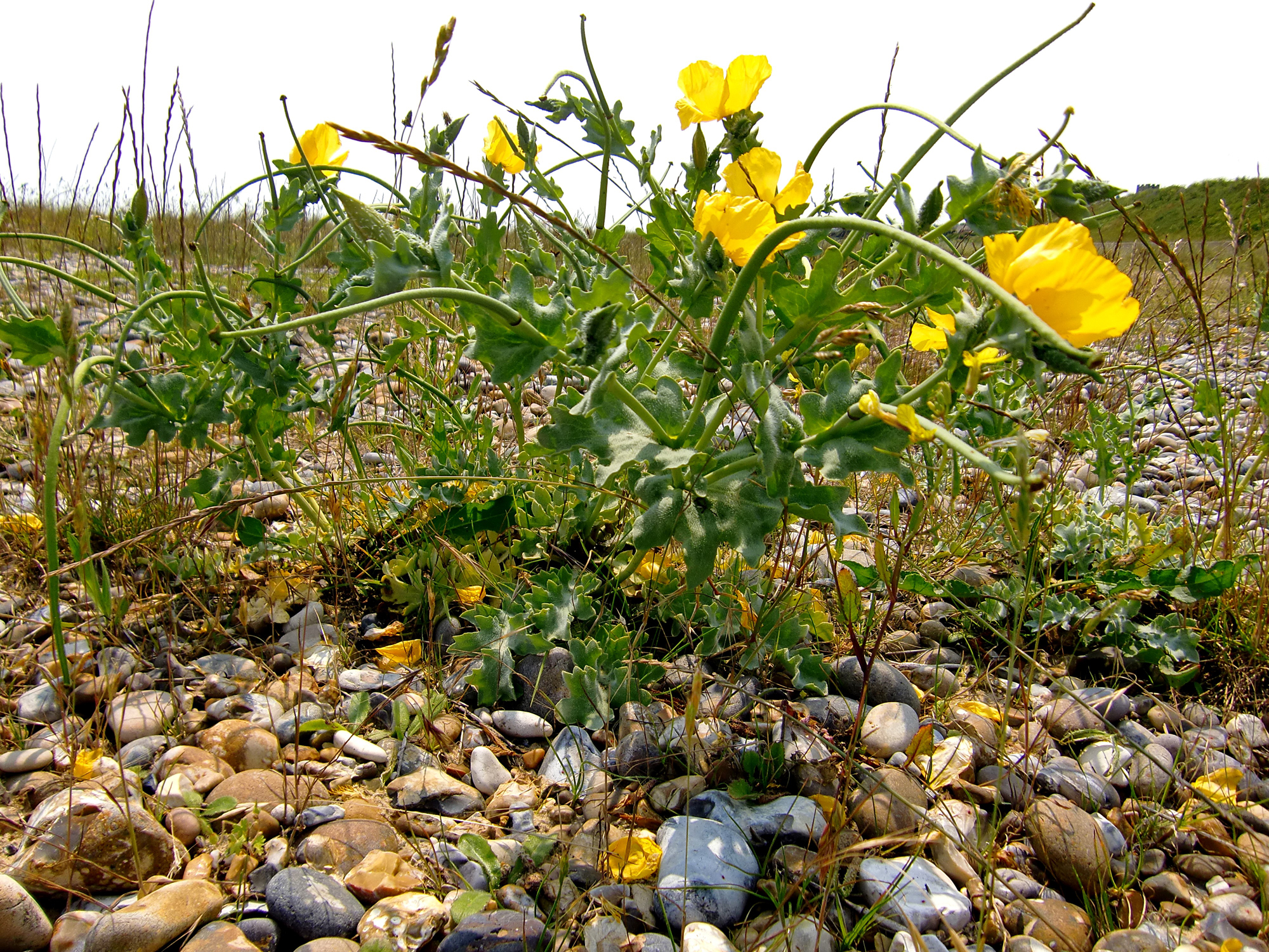
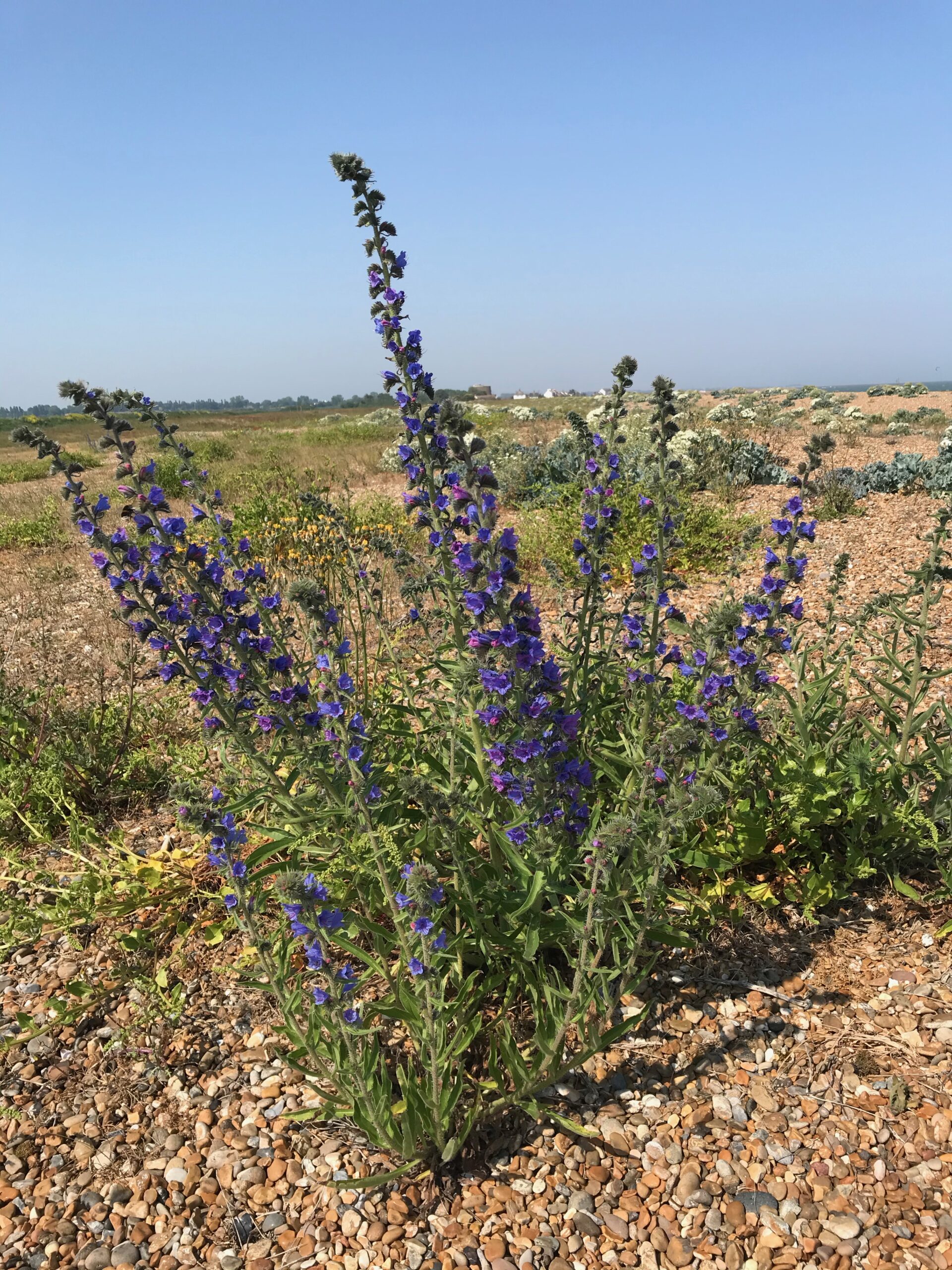
We did observe several changes. The sea kale is now very abundant, popping up everywhere like huge cauliflowers. The sea pea has spread too and there are large drifts of it in new areas. Its clustered purple flowers fade to blue later and are then succeeded by succulent seed pods, which are said to have once staved off starvation on the Suffolk coast during a famine in the seventeenth century (but they can cause paralysis if eaten in quantity, just in case you were tempted). Scattered amongst these are other shingle specialists like orache (much scarcer this year), sea beet, sea-campion, curly dock, viper’s bugloss, buckshorn plantain, stonecrop and the striking yellow-horned poppies (beautiful, but classified as a toxic weed in North America, and containing hallucinogens).
The most striking change, however, is in the expansion of the grasses that now cover the shingle ridges nearer the houses. That is evidence that the banks have accumulated depositions of soil and have to that degree stabilised – with the further benefit that hares and skylarks are now exploiting this new emergent habitat, along with various butterflies, moths and bush-crickets. That’s all the more reason to ask visitors to help us conserve this precious environment. For there is one other tactic these vulnerable plants need to survive, this one more under our control than theirs:
Thank you.
Jeremy Mynott
5 July 2022