I strode out from the house on one of my regular walks the other morning and after I’d gone a couple of hundred yards I suddenly realised I was naked. Well, not completely of course, but when I went to raise my binoculars to look at a distant bird I discovered with a shock that I’d left them back at home. They’ve been so constantly around my neck on walks since childhood that at first I felt I’d lost an additional organ of sight. I still had my five original senses, though, and I started exploring my immediate surroundings more closely with them instead. There were two trees still in leaf, I noticed, a beech and an oak. I picked some of their leaves to examine them more intimately. They had a crisp, dry papery feel and crackled pleasantly to the touch. I sniffed them – the beech leaves had a soft, earthy odour but the oak ones hinted at some deeper fragrance I couldn’t quite place. I glanced around to see if I was being watched and warily nibbled a few. I could now taste a tang of sharpness in the oak leaves and spat those out pretty sharply. Don’t try this at home – I think it was probably the tannin and is meant to deter deer and other foragers. Looked at closely, the beech leaves were particularly beautiful, a rich chestnut colour with their internal veins prominently exposed as they branched out from the mid-rib like little tree skeletons. A perfect natural image of the vascular architecture.
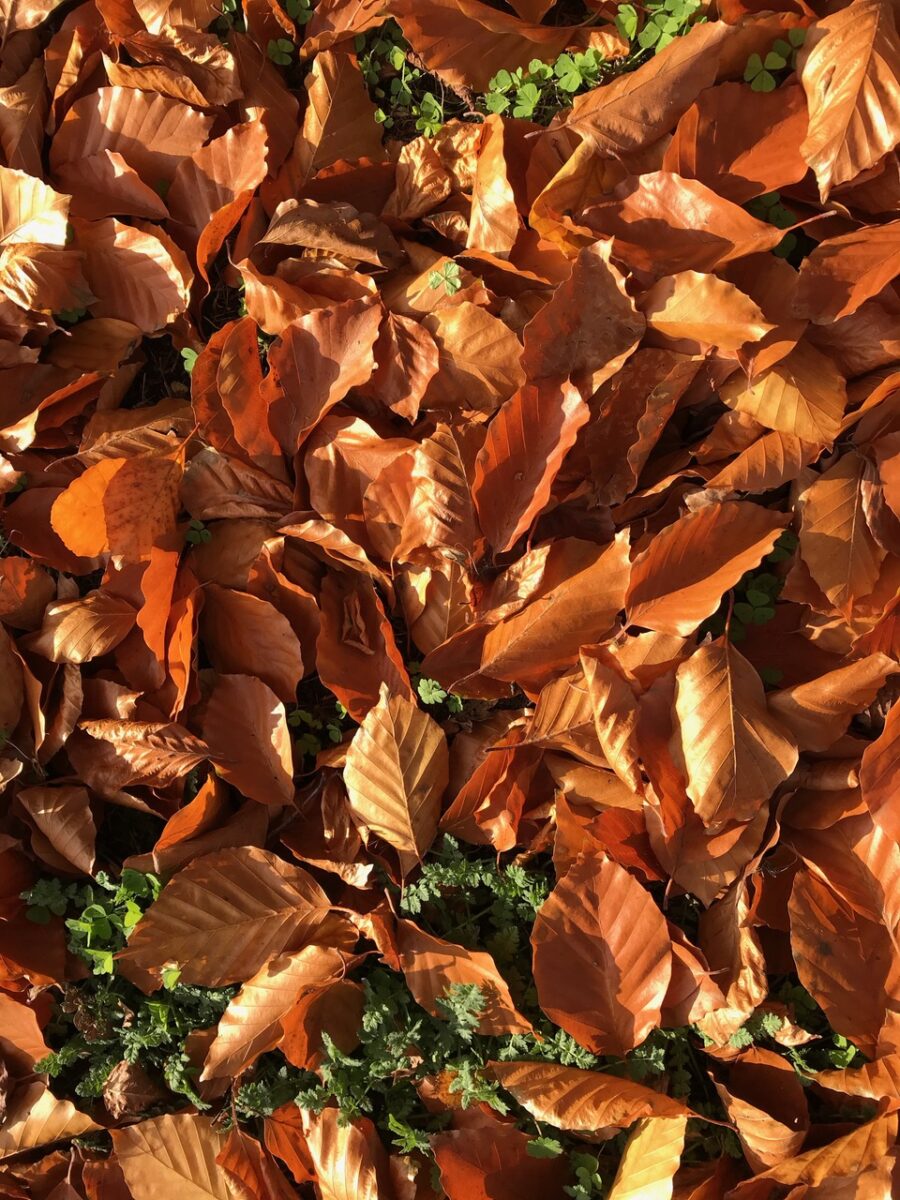
The leaves were still strongly intact, however, and firmly attached to the parent trees. Why, I wondered, do oaks and beeches hold on to their leaves so long, often right up to next spring, when other deciduous trees shed them – in one of the defining manifestations of autumn (the North American ‘fall’)? When I got back home and was restored to my books (and binoculars) I tried to investigate this and learned a new word describing the phenomenon, ‘marcescence’ (evidently new to spellcheckers, too). The scientists have this technical term for it but it turns out they don’t really know why it occurs. Some suggested explanations are: that it helps protect the growing buds from foragers like deer (and me); that it ensures the leaves will eventually fall close to the tree’s roots and so recycle its nutrients; that it deters predatory insects; or all of the above. But none of these answers seem to explain why as a strategy marcescence is restricted just to oaks, beeches and a very few other trees like hornbeam.
New explorations for a new year.
Jeremy Mynott
January 2026