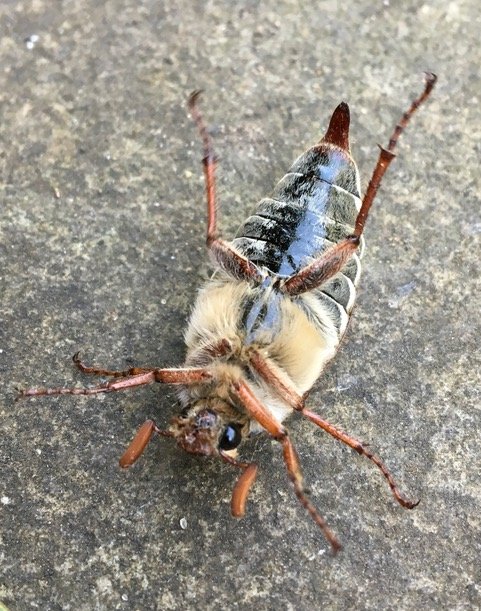
Which do you think are the most successful animals on the planet? Not mammals, with some 8,000 different species worldwide, nor even birds with over 10,000. It’s actually beetles, with well over 400,000 – and counting. The environmentalist J.B. Haldane famously quipped that ‘The Creator, if He exists, must have had an inordinate fondness for beetles.’ In Britain, the family includes such charismatic species as ladybirds, stag beetles and glow worms, but also some less popular ones. The Summer Bug, aka cockchafer or doodlebug, which is most active in May and June, can seem quite alarming when buzzing around noisily at night, especially if they bang into your windows with a sharp ping, attracted by the light. They are more clumsy than aggressive, in fact, and often end up on their backs waving their legs around rather pathetically or even knocking themselves out from the impact. They gave their name to something altogether more dangerous, however – the terrifying V1 flying bombs launched at Britain towards the end of World War II. Nicknamed doodlebugs these too would buzz loudly overhead but when their engines cut out above their targets there would be several seconds of heart-stopping silence before they exploded – and you breathed a guilty sigh of relief that it wasn’t your house.
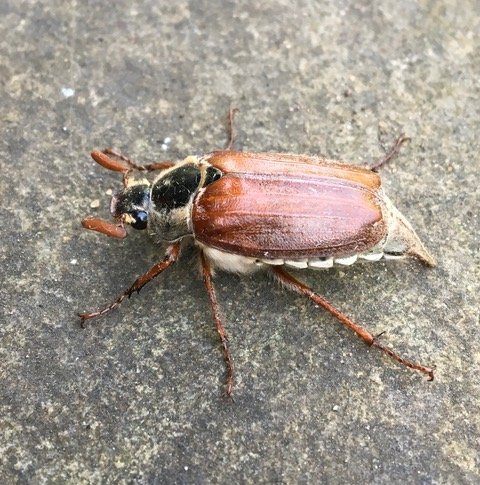
One shouldn’t transfer that wartime doodlebug-dread back on to the beetles themselves, though. They are very handsome when you get a close look. They have grooved bronze wing-casings (the ‘elytra’), black heads, white fluffy down underneath and elaborate feathery antennae to enhance their sense of smell. There is also a related rose chafer you might see in your garden which glitters with a brilliant metallic green. Chafer is the old name for beetle and just means ‘one that chews’. They are vegetarians, feeding on leaves and roots. Cockchafers were once very abundant and became regarded as a serious agricultural pest because they gnawed the rootlets of young crops. There is even a place in Gloucestershire, Charingsworth, supposedly named after a swarm of chafers. Their numbers were later much reduced by pesticides, though there are still cyclical surges in the population.
Chafer grubs constitute an important food-source for other creatures. When you see rooks or crows pecking deeply in a grass field they are probably after the fat, white cockchafer larvae (‘rookworms’). Badgers gorge on them too and will dig up your lawn if they think you’re harbouring any, while moles hunt them down from underground. In some cultures beetle-grubs also form a regular part of the human diet, while yet other kinds of beetles dispose of the world’s natural waste and debris. Everything in nature is connected, often surprisingly – including to us.
Jeremy Mynott
June 2026